
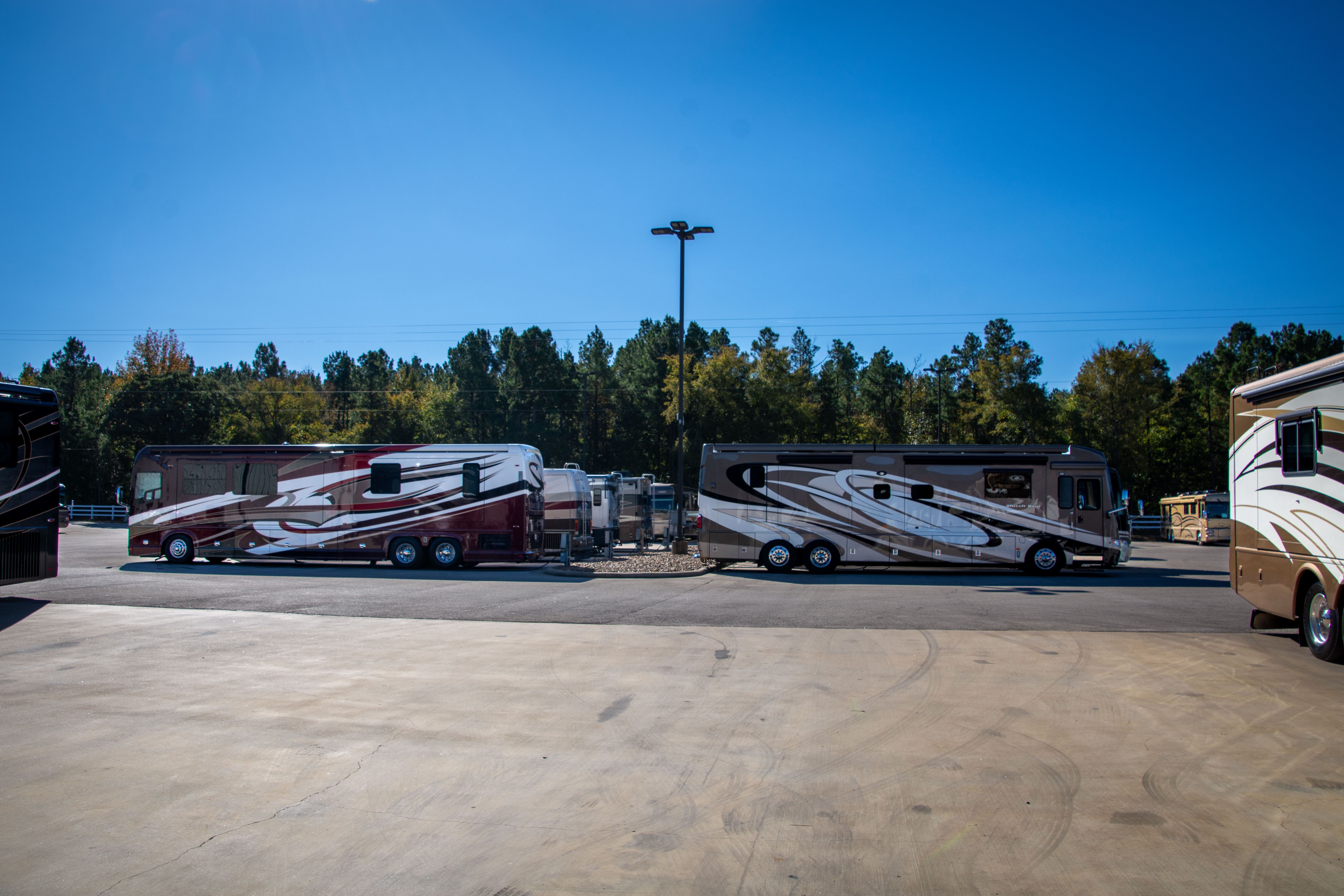
Motorhome Systems Checklist
Before setting out for your trip, review this checklist to help prevent unpleasant and costly repairs.
Chassis System
- Check that the fluid levels are in operating range (oil, power steering, engine coolant, windshield washer, transmission, brake fluid, etc.).
- Check engine starting battery for clean connections and proper state of charge.
- Make sure all lights and flashers are operating.
- Check horn operation.
- Start engine and check all gauges for proper operation.
- Make sure foot and parking brakes are working properly.
- Check wheel lugs for proper tightness.
- Make sure tire pressure is set according to actual axle load.
Generator
- Check for cleanliness of the generator as it affects efficiency.
- Service the air cleaner if needed.
- Check oil level and change if needed.
- Check generator starting battery for clean connections and proper state of charge.
- Keep governor and choke linkage clean.
- Check owners manual to ensure proper maintenance has been performed.
Refrigerator
- Operate refrigerator on gas and look at burner to see if flame is blue. If not, have repairs performed.
- Check to ensure there are no obstructions in ventilation system.
- Check to see that control knobs are not stripped causing a false thermostat reading.
- When packing the refrigerator, do not pack so tightly as to shut off internal air flow.
Air Conditioning
- Check air filters and clean if necessary. Make sure cooling unit coils are clean and free of debris.
- Check to see that condensing unit is clean, free of obstructions, and nothing is blocking air flow.
- Check voltage at outside panel. Most air conditioning systems are designed to operate at 120 volts plus or minus 10% (108-132 volts).
Inside the Coach
- Turn off the water pump switch.
- Close windows and vents.
- Check that cabinet doors and drawers are closed.
- Check that refrigerator door is fastened.
- Check that no heavy items are stored in overhead cabinets.
- Check that counter tops, range top, tabletops and shelves are clear of unsecured items.
- Make sure fire extinguishers are fully charged.
- Check that smoke and carbon monoxide detectors are installed and working properly.
Cold Weather Operation
- LP-gas appliances, furnace and gas operation of refrigerator are designed with sealed combustion areas. If frost or condensation accumulates in closets or cabinets during long periods of cold weather operation, leave doors to these areas open to provide air circulation.
- Be sure kitchen and roof vents are open when using oven or burners.
If Towing a Car With a Tow Bar
- Is the tow bar hooked up and checked?
- Are the safety chains crossed under the coupling and hooked?
- Are the towed vehicle lights working?
- Is the transmission in the proper gear?
- Is the drive shaft disengaged if need be?
- Is the towed vehicle's parking brake off?
- Is the ignition in the first on position?
- Do you have a spare set of keys for the towed vehicle? If yes, lock the towed vehicle.
- Do not attempt to back up when hooked up. Remember, you are driving a vehicle that is 20 feet longer!
It's always best to consult your owner's manual or a certified RV technician before ever attempting to work on your RV yourself. Get expert advice on your coach by giving MOT a call at 1-800-651-1112.
